
Across Colorado, local governments are grappling with how to regulate new data centers, with some opting to approve large-scale projects and others imposing temporary bans or moratoriums to study their effects on community resources.
While Weld and Douglas counties recently moved forward with significant data center developments, several other municipalities, including Broomfield, Longmont, Denver, Boulder, Jefferson, and Larimer counties, have instituted pauses on new data center construction this year. The issue has become contentious, with proponents citing potential economic benefits and opponents raising concerns about noise, electricity, and water consumption.
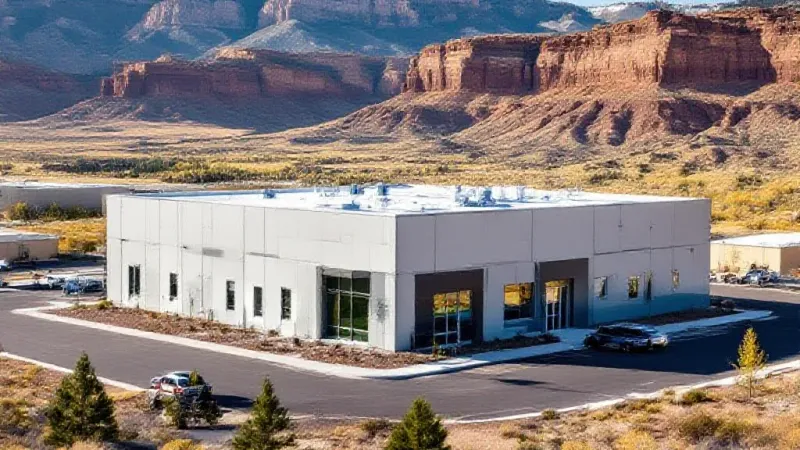
In recent weeks, the Weld County Board of Commissioners approved a permit for Global AI to operate an artificial intelligence data center at the 41-acre former Kodak/Carestream property near Windsor. The company plans to repurpose a vacant manufacturing building at the industrial site. Despite concerns from some opponents voiced at public hearings regarding water, electricity, and noise, Poudre Valley REA officials confirmed they had the capacity to serve the facility. Global AI officials informed commissioners that the data center's planned closed-loop, air-cooled water system would result in annual water consumption "less than what your house uses, 68,000 gallons annually." This facility could become the largest of its kind in Colorado, and Commissioner Chair Scott James noted it "will spur economic activity."
Similarly, in August, Douglas County commissioners approved a $19.3 million tax incentive designed to attract a Flexential data center to Parker. The agreement will rebate 100% of Douglas County’s share of the business personal property tax generated by the facility for the next 35 years, applying to assets like equipment and machinery. Officials confirmed Flexential would continue to pay all other applicable taxes, including real estate and district taxes. In July, the Colorado Springs planning commission also voted in favor of Project Taurus, a proposed artificial intelligence data center by Raeden that requires approximately 50 megawatts of power.
In contrast, a growing number of municipalities have taken action to limit data center development. In July, the Broomfield City Council approved an 18-month moratorium on data centers, extending through December 2027. The Longmont City Council greenlighted a ban on hyperscale data centers consuming more than 100 megawatts of power in June. Denver city officials approved a one-year moratorium on new data center permits in May. Boulder, Jefferson, and Larimer counties have also implemented temporary pauses.
Loveland, located north of Denver in Larimer County, is currently debating its own moratorium for new data centers. During a recent Loveland City Council study session, resident James Young expressed concern about the local electrical infrastructure's ability to support large data centers, calling them "too large of an asset." Another attendee, Sierra Pierce, questioned the community benefit of an AI data center, referencing the Colorado River crisis and drought conditions. Loveland City Council members earlier this month showed support for a temporary suspension on large-scale data centers requiring 10 megawatts of power or more and relying on industrial-scale cooling infrastructure. The proposed resolution, with a recommended length of six months, is anticipated to be acted upon at the Sept. 15 meeting. Loveland City Councilmember Laura Light-Kovacs stated, "Our resources are not unlimited."
In May, the City and County of Denver and Jefferson County imposed temporary moratoriums, with Jefferson County Commissioner Rachel Zenzinger stating the need to evaluate how data centers interact with the Wildland Urban Interface, water supply, environment, and community health, calling it a "necessary pause." The business community has expressed caution about such bans, with Leslie Oliver, Vice President of External Affairs for the Denver Metro Chamber of Commerce, stating that "blanket bans are not the right answer." Daniel Ryley, Vice President of the Metro Denver Economic Development Corp., acknowledged legitimate concerns but stated that "a blanket moratorium on an entire industry is not the right tool."
Currently, Colorado hosts around 60 data centers, with the majority located in the metro Denver area, according to the Data Center Map. State lawmakers in the 2026 legislative session killed competing bills related to data centers, leaving regulation of these facilities to the Colorado Public Utilities Commission for now. Establishing a data center requires an application and approval by a development review team comprised of experts from multiple departments.