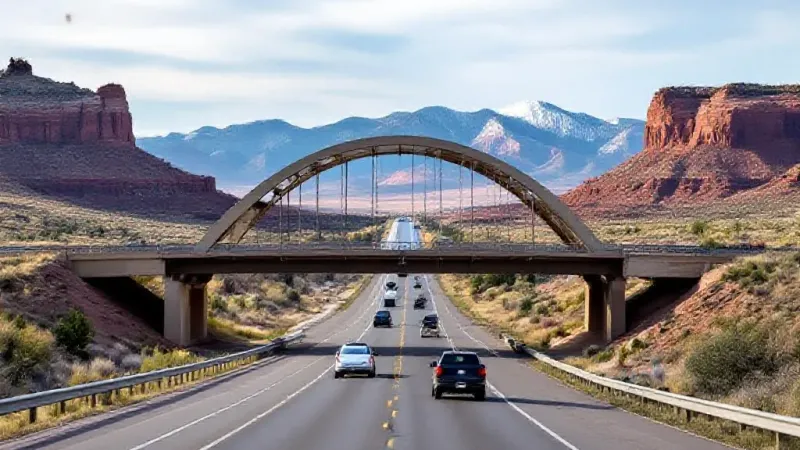
A major investment in wildlife safety on Interstate 25 has drastically reduced animal-vehicle collisions, according to state wildlife and transportation officials. In the roughly ten months since North America’s largest wildlife overpass system opened between Larkspur and Monument, drivers have hit only two animals on a stretch of highway where collisions once occurred almost daily. This represents a 91% drop in incidents, making roads safer for both commuters and wildlife.
The crossing system, completed last December, cost $15 million and includes a large 209-by-200-foot bridge, five wildlife underpasses, and miles of fencing designed to guide animals toward these safe crossing points. The project helps a variety of creatures, from elk to tiny toads, navigate the six-lane interstate that divides 39,000 acres of crucial habitat. Bridget O’Rourke, a spokesperson for Colorado Parks and Wildlife, expressed enthusiasm for the project’s success, stating, “We are thrilled.” She noted that such overpasses, underpasses, and funneling mechanisms for animals have been statistically proven to work.
This collaborative effort between state engineers and wildlife biologists aims to protect big game, which frequently move through this busy corridor. Animals like elk, deer, and pronghorn typically migrate to lower elevations as food becomes scarce at higher altitudes. Ms. O’Rourke pointed out that this year's drought and wildfires have prompted some animals, including bears, to move earlier than usual in search of food. Additionally, the end of daylight saving time often causes a sharp increase in collisions as earlier winter sunsets coincide with evening rush hour commutes and peak animal migration seasons. Ms. O’Rourke also highlighted that Colorado's growing human population increasingly encroaches on wildlife habitat.
While the overpasses were primarily designed for larger animals, biologists using surveys and trail cameras have observed smaller creatures, such as bunnies and northern leopard frogs, utilizing the crossings. Northern leopard frogs, whose populations have declined significantly in recent years, hold a protected status. Lisa Schwantes, a regional communications manager for the Colorado Department of Transportation, confirmed that pronghorn were observed using the interstate for the first time in 20 to 30 years this past June, with additional tracking data showing their use of underpasses as well.
The reduction in collisions is not only saving animal lives but also reducing crashes that can be traumatic, dangerous, and costly for drivers, according to Ms. Schwantes. Fewer crashes also mean fewer law enforcement and maintenance workers are needed to respond to incidents and divert traffic. Data shows that travel delays along the corridor have dropped by about 9%. The Colorado Department of Transportation tracks roadkill and wildlife collisions through reports from Colorado State Patrol troopers who respond to crashes and state maintenance workers who remove carcasses or respond to driver reports.
Using this data, the Colorado Department of Transportation, in partnership with Colorado Parks and Wildlife and the Colorado Wildlife and Transportation Alliance, identifies other areas across the state where wildlife overpasses could be most beneficial. Six more crossing systems are currently in the design phase, including the first overpass specifically for Rocky Mountain bighorn sheep along Colorado 40, east of Empire. Other planned projects include locations on the westbound lanes of I-70 at East Vail Pass between Vail and Copper Mountain, I-25 just north of the New Mexico state border, U.S. 160 east of Cortez in southwestern Colorado, Colorado 40 west of Craig, and near U.S. 287 south of the Wyoming border. These projects will extend the benefits of safer crossings to other parts of Colorado, including the Western Slope.
To help fund these future initiatives, Colorado drivers will have the option, starting in January, to contribute a $5 fee toward the construction of wildlife passes statewide. This voluntary contribution is similar to the $29 fee for the Keep Colorado Wild pass, which has generated $146 million since its launch in 2023. Ms. O’Rourke emphasized that while a $5 contribution may not seem substantial, it accumulates and demonstrates the state's genuine commitment to addressing this issue.