U.S. Representative Lauren Boebert reports recent legislative efforts and funding aimed at securing Colorado's water future, addressing critical needs for communities across the state's 4th Congressional District and combating out-of-state water claims. Boebert emphasized that water availability underpins the state’s agricultural sector, municipal services, and future generations, stating this fight is not theoretical.
Boebert stated that families in southeastern Colorado, including residents in Bent, Crowley, Kiowa, Otero, Prowers, and Pueblo counties, continue to face challenges with groundwater containing radium and uranium. These issues persist despite the authorization of the Arkansas Valley Conduit project, which promised clean, reliable water from Pueblo Reservoir to approximately 39 communities and 50,000 people. U.S. Representative Boebert described the conduit as essential, saying it is "the difference between safe drinking water and water that fails a health standard." She confirmed her support for completing the project, noting her work to pass "Finish the Arkansas Valley Conduit" language in the House of Representatives twice in the last three months, and pledged to ensure its completion.
Alongside these broader legislative efforts, Representative Boebert announced that $11.75 million has been secured for specific water projects across the 4th District, part of 13 community project requests signed into law. This funding is directed towards tangible infrastructure improvements. For instance, a new pipeline is planned from Plum Creek to Rueter-Hess Reservoir, enabling Castle Rock to store renewable water instead of relying on groundwater. In Weld County, a regional treatment plant is slated for Cobb Lake, serving Severance, Windsor, Eaton, and neighboring communities. Near Wiggins, the Prairie View Ranch system will see consolidation to bolster drinking water and fire protection. Other projects include a new wastewater plant in Lamar, well redundancy measures in Kiowa, reverse-osmosis treatment facilities in Brush, and essential system upgrades in Ovid, Louviers, and Walsh.
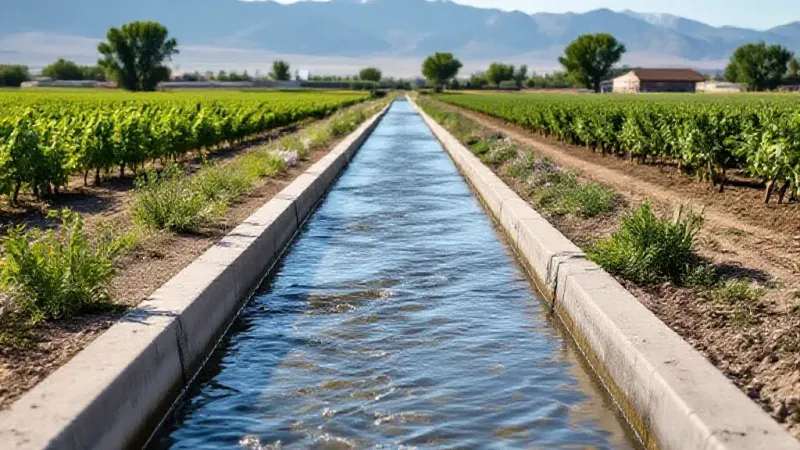
U.S. Representative Boebert also voiced strong opposition to Nebraska's proposed Perkins County Canal. This project, she noted, seeks to revive a century-old claim to divert South Platte River water by cutting a canal through Colorado’s Sedgwick County, water that Boebert stated Colorado farms and towns depend on. Nebraska has initiated a lawsuit against Colorado in the U.S. Supreme Court and has reportedly threatened eminent domain against Colorado landowners unwilling to sell their property. Boebert characterized this as an inappropriate approach to resolving interstate compacts. She asserted that Colorado is fulfilling its obligations regarding the South Platte, and Nebraska should not be permitted to appropriate Colorado land or jeopardize irrigated farmland in Sedgwick, Logan, and Washington counties for a project she considers a poor investment for both states.
Representative Boebert highlighted concerns regarding language advancing in the Senate-drafted Water Resources Development Act (WRDA). She stated this language could compel the Army Corps of Engineers to approve a permit for the Perkins County Canal, potentially undermining Colorado's position in the Supreme Court case. Boebert warned that if the Senate language proceeds and the Corps is forced to issue the permit, the Supreme Court case would become irrelevant because the permit would enable the project, allowing Nebraska to commence construction while Colorado continues legal arguments. She affirmed her commitment to protecting Colorado's water resources, stating that Colorado water should remain under Colorado control. Boebert concluded that Colorado stores, cleans, and delivers water to those with rights to use it, and will not permit external entities to compromise these resources through legislative maneuvers or by seizing Colorado land based on old compact claims. She pledged to continue funding projects for rural towns, push to finish the Arkansas Valley Conduit, and oppose the Perkins County Canal in the Senate WRDA bill.