
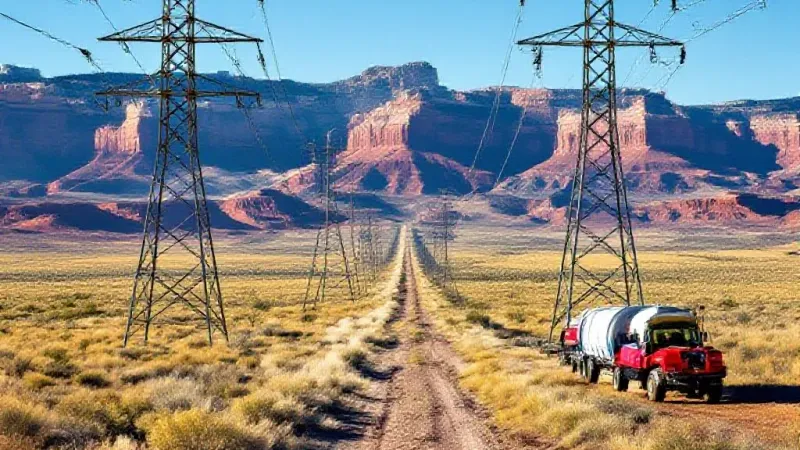
The U.S. Department of Energy is investing $250 million into a major transmission line project that officials say will significantly improve electricity grid reliability and lower costs for Coloradans. This substantial federal funding is directed towards the Western-Eastern Intertie Modernization Initiative, known as CO2TX, which is designed to enhance the transmission connection between Colorado and Texas.
The project involves a strategic relocation of a key connection point. Currently, a transmission connection exists at Lamar, but under the new plan, it will be moved to the higher-capacity May Valley substation in Brandon. This upgrade is intended to create a direct link to the Colorado Power Pathway transmission network, integrating the new capacity into the state’s existing high-voltage infrastructure.
For residents of Grand Junction and Mesa County, as well as families and businesses across Colorado, the implications are expected to be substantial. Governor Jared Polis emphasized that the project "means lower costs and fewer outages for Coloradans." According to the Governor, strengthening Colorado’s electric grid and expanding its capacity to share power with other regions will better protect households and businesses during periods of extreme weather and high electricity demand. This long-term investment, he noted, aims to both strengthen the economy and save people money by improving the electric grid.
The CO2TX initiative is part of a larger, state-driven effort. It falls under the umbrella of the Colorado Energy Office’s $1.2 billion infrastructure project. This comprehensive project aims to address the limitations of the country’s current power grid, which is divided into regional systems with restricted ability to share electricity across interconnections. The CO2TX project specifically targets bridging these energy gaps between the Western and Eastern interconnections.
Tim Walsh, Assistant Secretary for Environmental Management at the U.S. Department of Energy, affirmed that this $250 million federal investment is crucial for ensuring that households in Colorado and throughout the Western United States have access to secure, abundant, and reliable power. He highlighted the importance of this reliability even during severe weather events and times of increased demand. Walsh stressed that affordable, reliable energy serves as a fundamental building block for a thriving economy and vibrant communities.
Beyond the federal contribution, the project is also backed by significant private investment. Xcel Energy, which operates as Colorado’s largest electric utility, is providing a substantial 80% match to the overall project's financing. This matching fund demonstrates a strong commitment from the private utility sector to bolster the state's energy infrastructure alongside the federal and state initiatives. The combined investment aims to fortify Colorado's energy future against future challenges and support economic stability.