
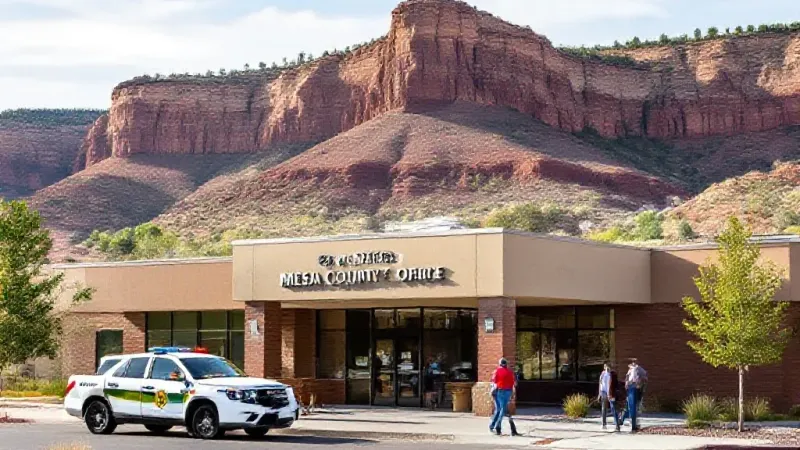
Colorado voters, including residents of Grand Junction and Mesa County, will decide in November on a proposed change to the state Constitution that would require local law enforcement agencies to communicate with federal immigration authorities regarding certain criminal charges. This measure, known as Amendment 81, aims to alter current state laws that limit cooperation between local and federal agencies on immigration enforcement.
Backed by the organization Advance Colorado, Amendment 81 would mandate that law enforcement agencies notify Immigration and Customs Enforcement (ICE) under specific circumstances. These include when an individual who is in the country illegally is charged with a violent crime, or when that individual has previously faced a felony charge. The notification requirement would also apply if an individual's legal status cannot be determined by local authorities.
The proposal comes after years of Colorado laws that have limited the extent of cooperation between local law enforcement and federal immigration authorities. For example, legislation passed in 2019 prohibits a law enforcement officer from arresting or detaining someone based solely on a civil immigration detainer. The 2019 law also bars probation officers and probation department employees from sharing an individual's personal information with federal immigration authorities.
Supporters of Amendment 81, including Advance Colorado, state that the measure would help "restore cooperation" between local law enforcement and federal authorities, particularly in cases involving individuals accused of serious crimes. According to information provided in the 2026 Ballot Information Booklet, a “yes” vote on Amendment 81 would require law enforcement to notify federal immigration authorities after filing certain criminal charges against individuals who are not confirmed to be lawfully present. Supporters argue that the measure would create a new uniform statewide standard for cooperation with federal immigration authorities. They contend that consistent requirements across jurisdictions would improve enforcement, reduce variations among local policies, and enhance public safety by allowing the criminal justice system to work more efficiently and effectively in removing potential criminals from the country.
Opponents of the measure, which include immigrant advocacy groups and several district attorneys, argue that Amendment 81 could lead to increased racial profiling. They also express concerns about the potential for improper detention of citizens and legal residents. The 2026 Ballot Information Booklet highlights these concerns, noting that criminal charges are allegations, not findings of guilt, and individuals should not face potentially life-altering immigration consequences, such as deportation, before receiving a fair trial. Opponents suggest that people who are legally present or who are found not to have committed any crime could be "swept up in immigration enforcement actions" if they are unable to prove their status within the measure’s "strict 72-hour timeframe."
Furthermore, opponents assert that Amendment 81 is too broad to be enforced equitably and consistently. They argue this could erode trust between law enforcement and the communities they serve. The measure reportedly fails to define key terms such as “reasonable effort” or “lawful presence,” which could leave enforcement up to the discretion of individual officers. This discretion, they argue, might lead officers to rely on subjective characteristics, such as language spoken or personal appearance, when deciding to review a person’s legal status. A breakdown in trust, opponents warn, may deter some individuals from reporting crimes, cooperating with investigations, or seeking assistance, for fear of subjecting themselves or members of their community to immigration enforcement. A “no” vote on Amendment 81, according to the 2026 Ballot Information Booklet, would maintain current law, allowing cooperation in some criminal matters but limiting state and local law enforcement involvement in civil immigration enforcement.
If approved, Amendment 81 is expected to increase government costs statewide. The Department of Revenue estimates approximately $50,000 would be needed for access to federal databases and programming changes, while the Department of Natural Resources estimates around $10,000 for computer system updates. Additional workload could also affect several other state agencies, including Higher Education, Human Services, Judicial, and Law and Public Safety, with these costs anticipated to be paid from the state’s General Fund.
Locally, Grand Junction and Mesa County agencies could experience significant impacts. Local law enforcement agencies, district attorneys, and Regional Transportation District officers could face increased workload and spending. This work would involve determining whether charged individuals are lawfully present in the United States and then notifying federal immigration authorities when required. Most of this new work is expected to fall on district attorney offices, and the associated costs would vary by jurisdiction depending on the number of affected cases.