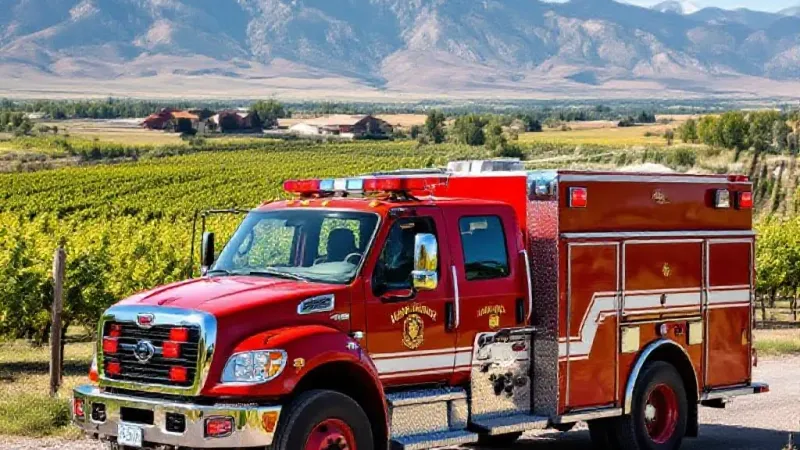
Rural residents in the unincorporated areas around Palisade will decide on a property tax increase for fire and emergency services on the Nov. 3 ballot. The ballot question, finalized and submitted to county election officials on Aug. 31, seeks to more than double the property tax mill levy, jumping from 5.242 mills to 12.5 mills. If approved, the measure is estimated to raise an additional $185,000 per year for these services, starting in 2027.
This proposed increase marks the first adjustment to the Palisade Rural Fire Protection District’s mill levy since 2011, when the district signed a contract guaranteeing service from the town’s fire department. Palisade Fire Chief Charles Balke stated that the town requested the increase, citing the rapid growth in costs to provide fire protection over the past decade and a half.
According to Chief Balke, the cost of operations has "increase exponentially." Fire officials also noted that the expense to outfit an individual firefighter has more than doubled in the last decade, and prices for fire apparatuses have also risen quickly. Compounding these trends, the Palisade Fire Department has transitioned since 2011 from a largely volunteer-run operation to one staffed mostly by paid, full- and part-time employees.
The intergovernmental agreement between the rural district and the town's fire department does not expire until at least 2031, unless there is a mutual agreement to end it, according to public records. This agreement requires the Palisade Fire Department to provide the rural district with emergency medical services, fire inspections, and any other services it offers within the town limits. In return, the rural district must pay Palisade all revenues collected through its dedicated mill levy, retaining only a small portion for administrative expenses.
If voters approve the additional property taxes, rural homeowners would pay an extra $42.55 for every $100,000 of their property’s value, as stated in the ballot language. Palisade Town Trustee and Rural Fire Protection District liaison Ed Seymour noted that this change would bring the rural area's mill levies in line with those in Clifton, a neighboring unincorporated community. Seymour expressed regret that the issue had not been addressed sooner, stating, "I wish we hadn’t waited as long as we have." He added that tightening budgets are not unique to Palisade but are seen "Across the valley."
Chief Balke warned that if the measure is voted down, the town may need to "re-prioritize" programs. While no specific plans have been announced, Chief Balke suggested that continued funding shortages could lead to cuts in public education efforts and staff numbers. Such reductions, he explained, could complicate emergency response efforts, particularly when the area faces multiple fires simultaneously, and potentially increase the likelihood of such scenarios. Balke raised concerns about the department's "ability to respond to not only the initial calls, but secondary calls" with increased call volume.
Terry Moreland, Vice Chair of the Palisade Rural Fire Protection District Board, hopes these outcomes can be avoided. Moreland stated that the district has explored potential contingency plans with fire officials in Clifton. Based on his informal conversations with constituents, Moreland believes that taxpayers in the rural area around Palisade seem open to the requested tax increase. He pointed out that the contract has seen no increase or change for 15 years, and that there is a clear need for it now, which people he has spoken with also acknowledge.