
Colorado has launched a significant economic initiative focused on quantum technology, a move that could reshape the state's economy. While much of this development is currently concentrated on the Front Range, a local business leader suggests there is a direct opportunity for the Western Slope, particularly in fields like precision agriculture. Dalida Sassoon Bollig, chief executive officer of the Business Incubator Center at 2591 Legacy Way in Grand Junction, emphasizes that connecting to this statewide effort requires local action to build the necessary infrastructure and workforce.
The state has established one of the country’s leading quantum-technology clusters, encompassing approximately 3,000 workers across more than thirty companies. This cluster is anchored by a federal Tech Hub designation and a research base supported by institutions including CU Boulder, Colorado State University, and the Colorado School of Mines. Further solidifying this push, Colorado signed an agreement with Taiwan in February to advance work in quantum, photonics, semiconductors, and notably, precision agriculture.
While it might seem that these developments are primarily a Front Range story, Elevate Quantum, the consortium spearheading the effort, maintains that the opportunity is broader. Bollig reinforces this, pointing out that investment and talent tend to follow areas that are prepared for them. The focus on precision agriculture within the Taiwan agreement is particularly relevant to the Western Slope, highlighting a direct intersection between the state’s advanced-technology strategy and an industry already fundamental to the region.
The quantum industry faces a significant bottleneck: a shortage of qualified personnel. Elevate Quantum reports approximately three open quantum jobs for every qualified worker. These roles are often well-compensated, with the average quantum job paying more than $125,000 annually. Close to half of these projected roles are not expected to require an advanced degree, and technician positions are forecast to double as a share of the workforce within five years. Recognizing this need, the Colorado School of Mines has introduced the nation’s first bachelor’s degree in quantum-systems engineering, designed to meet the industry’s demand for a wider range of technical skills beyond traditional master's and doctoral-level training.
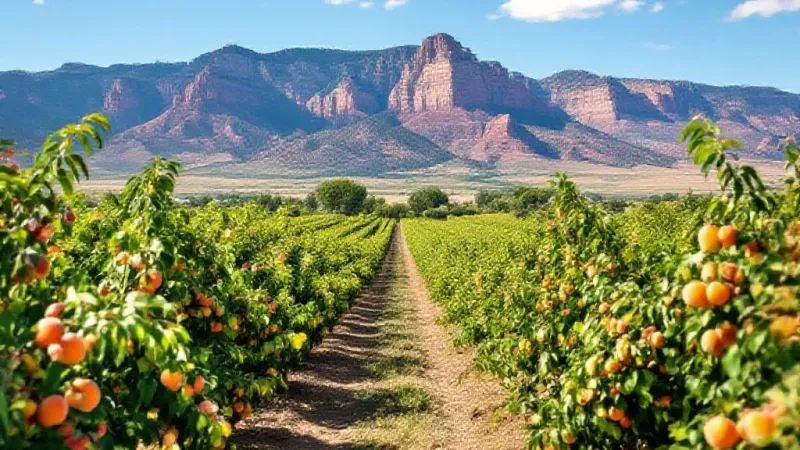
Precision agriculture involves technologies such as in-field sensors, data collection from irrigation systems, and advanced tools for smarter water use and soil information. This technological approach helps producers maximize output from limited water and other inputs. Bollig notes that the Western Slope, with its existing agricultural producers, vast land, water management challenges, and practical knowledge, possesses the assets technology companies need to develop products that are effective outside of laboratory settings.
The entry point for the Western Slope into this advanced-tech economy might not be in quantum computing itself, but rather in supporting fields. These include machining, electronics, optics, sensor technology, advanced manufacturing, or the agricultural applications built upon these technologies. Bollig suggests these are capabilities that a rural region can realistically develop.
However, this ‘on-ramp’ to opportunity requires active local construction. A federal designation alone does not train a technician in Delta, nor does an agreement with Taiwan automatically connect a Montrose grower to a photonics firm. Bollig states these statewide initiatives create only the possibility of participation; turning that possibility into tangible economic benefits and paychecks is “local work.” This local effort could include community colleges developing relevant credentials, employers being willing to hire early cohorts, local manufacturers adapting to supply a new industry, and advisors connecting rural businesses to existing programs.
Without this proactive local development, Bollig warns that no single decision will mark a missed opportunity. Instead, years from now, it will simply appear as another opportunity that accumulated where capacity already existed, bypassing other areas. Regions tend to fall behind due to an accumulating gap between those that prepared and those that waited to be invited. Bollig clarifies that embracing this new economy does not mean abandoning existing pillars like agriculture, energy, outdoor recreation, and small business. Instead, it’s about making a choice: to build the workforce, partnerships, and infrastructure needed to connect to the state’s generational bet, or to assume the opportunity is for somewhere else. The question for the Western Slope, she concludes, is whether local communities intend to forge the connections that secure a place in this new economic landscape for their businesses, workers, and communities.