
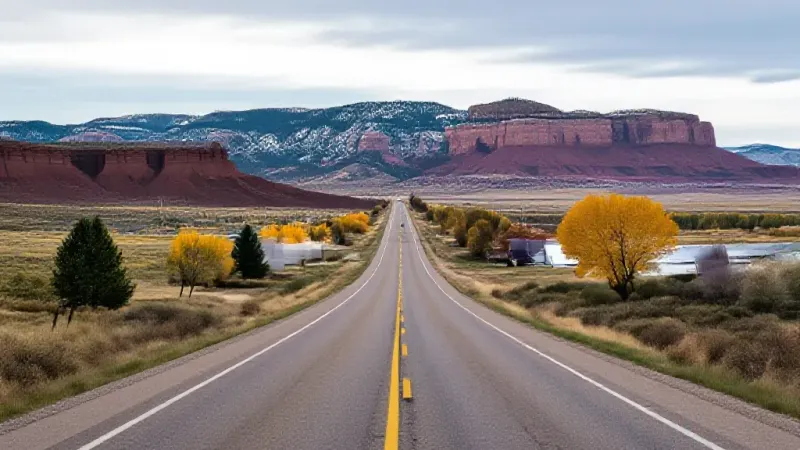
The Colorado State Patrol (CSP) is reminding drivers that the period from October through December marks the peak season for wildlife crashes on Colorado roadways. According to CSP, this heightened risk is due to animals migrating to lower elevations for the colder months and the concurrent peak of their mating season.
Animals become more mobile, easily distracted, and are more likely to cross roads during these months, increasing the chance of collisions. CSP data shows a concerning trend, with wildlife crashes increasing every year since 2021. Last year alone, troopers responded to over 3,900 crashes involving wildlife across Colorado, with autumn identified as the most active time for these incidents.
Col. Matthew C. Packard, chief of the Colorado State Patrol, emphasized the vulnerability of many species at this time of year. While white-tailed deer and elk are the most frequently struck animals, other species like pronghorn, bear, and marmots also contribute to encounters across all regions of the state. Col. Packard stated that it is up to all drivers to remove distractions and watch out for these animals.
Several specific areas across Colorado have been identified by CSP data as having the highest risk for wildlife crashes. These include sections of Interstate 70, particularly from Golden to Evergreen and from Vail to Glenwood Springs. Other high-risk routes include Highway 50 from Gunnison to Montrose, Highway 550 from Montrose to Ouray, and Highway 285 from Fairplay to Alamosa. Southern Colorado roads such as Highway 160 from South Fork to Pagosa Springs are also flagged, alongside Highway 82 from Aspen to Carbondale. Locally relevant corridors include Highway 13 from Rifle to Craig and Highway 139 from Loma to Rangely. Additionally, Highway 36 from Boulder to Estes Park and Highway 34 from Estes Park to Granby are listed as high-risk areas.
To help drivers avoid these dangerous collisions, the CSP has issued several tips:
Drivers should slow down, especially during dawn and dusk hours when animal activity is typically highest. Staying alert to animal crossing signs is also crucial, as these indicate areas known for wildlife presence. Scanning ditches and the shoulder of the road can provide early warning of animals approaching the roadway. Extra caution is advised when driving through heavily wooded areas or near open fields, where animals might be grazing or seeking cover.
Recognizing that animals often travel in groups is another important tip; if one animal crosses the road, drivers should expect more to follow. Using high beams when there is no oncoming traffic can significantly increase visibility, allowing more time to react to an animal on or near the road. Finally, if a collision with an animal becomes unavoidable, CSP advises drivers to apply the brakes firmly and remain in their lane. Swerving to avoid an animal can lead to a more serious crash involving other vehicles or roadside obstacles.