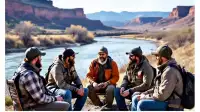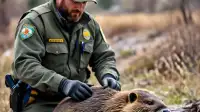

A group of Colorado Parks and Wildlife (CPW) employees has publicly stated its support for Amendment 83, a ballot measure that asks voters in November to consider adding a right to hunt and fish to the Colorado Constitution. While state law bars CPW as an agency from taking positions on ballot measures, the Colorado Wildlife Employees Protective Association (CWEPA) issued a statement of support following a vote by its membership.
The CWEPA represents approximately 230 of CPW's roughly 1,000 employees, including officers, biologists, and administrators. This marks only the second time in the group's 79-year history that it has taken a formal stance on an election issue. This position comes years after the association adopted a resolution advocating for wildlife management decisions to remain with the agency's science-based professionals, rather than being determined by ballot initiatives, a stance taken during the debate over Proposition 127, a failed 2024 measure proposing a ban on big cat hunting.
In an email to the Vail Daily, the CWEPA board wrote, "When issues directly challenge the principles and proven practices of professional wildlife management, our members believe their experience matters." The board emphasized that Colorado’s wildlife successes are built on sound science, field experience, and professional management, viewing well-regulated hunting and fishing as proven tools within this system.
Luke Hilgemann, executive director of the International Order of T. Roosevelt, a significant funder of Amendment 83, stated that the endorsement "makes it clear that Colorado needs to take a stand to protect hunting and fishing." He described the endorsing employees as "front-line workers" tasked with daily wildlife management who believe science should continue to guide management in Colorado.
Supporters of Amendment 83 argue that adding hunting and fishing as a constitutional right provides an extra layer of protection against perceived threats, such as the failed big cat hunting measure in 2024. The amendment's language seeks to establish hunting and fishing as the "preferred means of responsibly managing fish and wildlife," while also stating the right "does not limit the authority" of state agencies or the legislature to regulate these activities if necessary for sound science, public safety, or preserving future opportunities.
However, opponents criticize Amendment 83 as a "solution in search of a problem," noting that hunting and fishing are already legal under current state law. State statute already directs Parks and Wildlife to protect, preserve, enhance, and manage wildlife, declaring that the state shall utilize "hunting, trapping and fishing as the primary methods of effecting necessary wildlife harvests."
Mandy Culbertson, communications director for Wildlife for All, an organization opposing the measure, questioned whose interests Amendment 83 serves given current legality. She argued that the measure's "vague language would permanently lock one approach to wildlife management into the constitution," potentially leading to more litigation, increased state costs, and less flexibility for experts to respond to unpredictable challenges like climate change and biodiversity loss.
When asked about concerns that a constitutional right could hinder future changes to hunting regulations, the CWEPA board stated they do not believe it will prevent wildlife management from adapting. They wrote that professional wildlife management has always evolved with changes in populations, habitat, and understanding, relying on biological science, field data, monitoring, and professional expertise to evaluate and adapt strategies.
Gary Skiba, a former state wildlife biologist and a member of a committee opposing Amendment 83, claimed the CWEPA speaks for a "small subset" of CPW employees and tends to take a conservative approach, favoring existing policies. He characterized their stance as a "defensive attitude" against perceived threats to hunting.
Skiba further contended that hunting is a privilege and does not belong in the constitution alongside fundamental rights. He also pointed out that CPW’s funding model, where hunting and fishing licenses generate 44% of its revenue, gives hunters and anglers a "strong feeling" of entitlement to greater influence in wildlife management. He argued this goes against the agency's directive that "wildlife belongs to everybody in the public."
Beyond the CWEPA, Amendment 83 has garnered support from groups including the Colorado Bowhunters Association, Colorado Outfitters Association, Colorado Sportsmen’s Foundation, Rocky Mountain Elk Foundation, the National Rifle Association, Bass Pro Shops, and the Independence Institute. Opponents include outgoing Colorado Governor Jared Polis, Attorney General Phil Weiser, and U.S. Representative Joe Neguse.