
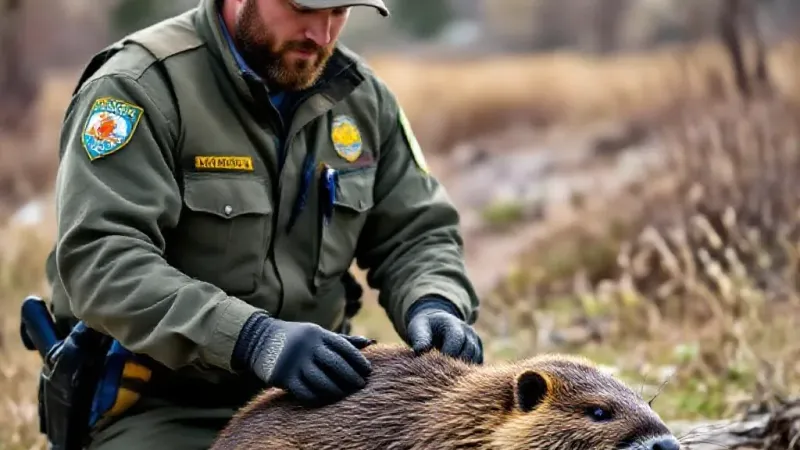
Colorado Parks and Wildlife (CPW) is introducing new rules for avocational beaver hunters that will take effect at the start of next month. These regulations are designed to provide wildlife managers with more precise information on where beavers are being harvested as the agency continues to implement its "Beaver Conservation and Management Strategy," finalized in February.
Under the new rules, avocational beaver hunters will be required to personally present harvested beaver carcasses or pelts to CPW for physical inspection and sealing. This change aims to enhance data collection for wildlife management efforts across the state.
The updated hunting regulations are part of a broader initiative by CPW to increase the presence of beavers in Colorado's wetland habitats. The agency believes a healthy beaver population can offer significant benefits for the state's streams and wetlands, including slowing and retaining water, expanding riparian areas, and creating habitat for a wide range of species. These thriving wetland areas can also help mitigate dryness by storing water for later release, which in turn hydrates vegetation and can slow the spread of wildfires. Additionally, CPW notes that a larger role for beavers in the ecosystem might help counteract some of the impact on riparian areas that have been affected by a booming moose population in recent years.
The state has already begun efforts to increase the beaver population, including the release of seven beavers at Garfield Creek State Wildlife Area in June. Colorado Governor Jared Polis has also expressed support for restoring the state’s beaver population.
Historically, beaver harvesting was much more common in Colorado. During the 1960s, as many as 8,000 to 10,000 beavers were harvested each year. In contrast, current harvest numbers are significantly lower. Between 2023 and 2025, approximately 1,300 beavers were harvested annually by avocational hunters, who typically harvest about two animals per year. This suggests around 650 people are involved in beaver hunting today. These 1,300 beavers represent roughly two to four percent of the state's estimated dam-building beaver population, which ranges from 43,000 to 64,000. While the current population is still in the tens of thousands, a study referenced by The Gazette’s Seth Boster indicates that Colorado has lost more than 50 percent of its beavers since the 1800s.
The comprehensive "Beaver Conservation and Management Strategy" is a 158-page document that focuses on five key aspects. These include population and habitat status and monitoring, beaver harvest management, beaver restoration opportunities, nonlethal approaches for reducing human-beaver conflicts, and beaver translocation policy and protocols. The new hunting regulations are a direct component of the harvest management aspect of this larger strategy, reflecting the state's ongoing commitment to informed wildlife management and ecological restoration.