A wave of new rules and proposals from the current federal government is posing a significant threat to the health of public lands used for grazing livestock, according to reports. Federal agencies managing these lands, including the Bureau of Land Management (BLM) and the U.S. Forest Service, state their efforts aim to bolster the country’s dwindling cattle herd and support American ranchers.
However, critics argue that these changes will not meaningfully support U.S. beef producers nor lower beef prices for Americans. Instead, they are expected to harm wildlife and undermine sustainable management of public lands, ultimately hurting cattle ranchers as well.
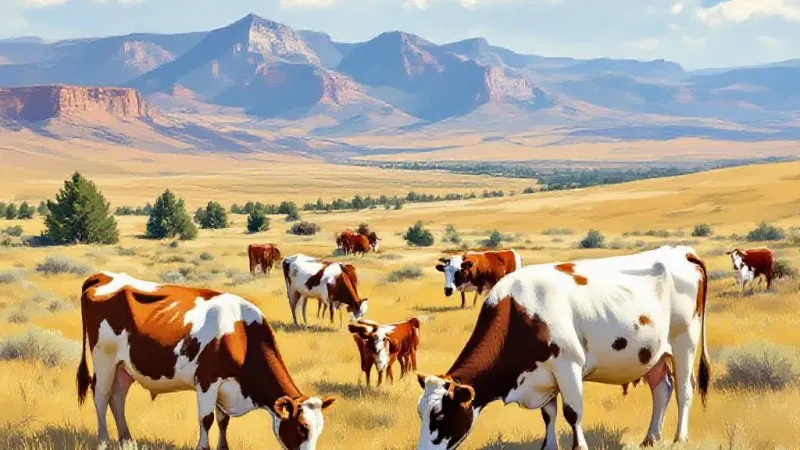
More than 70% of public land managed by the BLM and U.S. Forest Service in the contiguous United States, approximately 345 million acres, is available for grazing livestock. In Colorado alone, 7.8 million acres of BLM land and at least a million more of National Forest land can be grazed. These grazing allotments are, or will be, affected by updated grazing rules, the rescission of the Biden-era Conservation and Landscape Health rule, the revoking of grazing permits for bison, and various memorandums of understanding, directives, and plans guiding policy. These changes are primarily set to impact the Western U.S., where federal land is concentrated, including areas around Grand Junction and Mesa County.
While the proposed rules are intended to "ease unnecessary regulatory burdens" and "promote productive working lands," existing regulations for grazing on public land are already described as extremely lenient. Ranchers typically receive 10-year leases for grazing that are often automatically renewed and cost roughly 20 times less than grazing on private land.
Livestock grazing is identified as one of the leading causes of public land degradation in the West. The BLM has classified at least 37 million acres of land as degraded from overgrazing, a figure that includes nearly 2.5 million acres in Colorado. This degradation involves depleting native plant species, allowing invasive plants like cheatgrass to proliferate, which in turn fuels more frequent and severe wildfires. Grazing also contributes to erosion, loss of topsoil, and water pollution. In the arid West, cattle use a substantial amount of water; for example, producing 100 grams of beef protein requires 1,375 liters of water, compared to 93 or 204 liters for tofu or pulses.
These environmental impacts make public land less habitable for wildlife such as sage-grouse, native trout, and elk. Furthermore, predators like wolves and coyotes are reportedly killed to prevent depredation of livestock.
Historically, conservation nonprofits have partnered with ranchers to retire grazing allotments deemed particularly important for wildlife or especially degraded, allowing the land to regenerate. However, under the new proposals, conservation is reportedly "not considered a valid, co-equal use of grazing allotments." The BLM is now seeking to put livestock back on 24 million acres of land that had been intentionally vacated. Additionally, the BLM is proposing to significantly restrict public participation in government decisions about grazing on public land, which is theoretically owned by the public and managed with taxpayer dollars.
Despite the widespread use of public lands for grazing, it contributes very little to the overall supply of beef in the U.S., estimated at less than 2% of the total cattle herd, and does not meaningfully impact beef prices. Public land grazing is also highly subsidized. Ranchers pay a small fee of $1.69 per month per cow (with or without a calf). In 2024, grazing fees generated just under $13 million, while the cost of administering the program exceeded $100 million. This discrepancy amounts to a lucrative subsidy for a small number of cattle ranchers, as two-thirds of public land grazing permits are leased to just 10% of U.S. ranchers, some of whom are described as extremely wealthy.
While some small-scale ranching operations may rely on grazing public land to make ends meet, the current administration’s efforts may not address the most significant challenges facing the industry. A primary threat to ranchers in the Western U.S. is increasing aridity caused by climate change. Persistent drought reduces the availability of forage on public land and decreases yields of alfalfa and other feed crops, thereby increasing the cost of raising cattle. This, combined with more frequent wildfires, dried-up streams, and hotter summers, harms ranchers far more than public comment or conservation efforts have, according to reports.
The proposed updates to public land grazing are criticized as misguided in their attempt to undermine existing programs designed for sustainable management. Ignoring the impact of climate change and drought on Western cattle ranching is unlikely to make these issues disappear. Critics warn that public lands may not be able to support livestock indefinitely, and by the time cattle are forced off the land, it may be unfit for wildlife and the broader public.