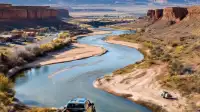

A new report from CoPIRG Foundation, Environment Colorado Research and Policy Center, and Frontier Group has detected PFAS, often called “forever chemicals,” in the Colorado River near the state border with Utah. This finding is significant for Grand Junction residents, raising questions about local water quality and the safety of consuming fish from the river.
The report indicates that PFAS were found in Colorado’s waterways at 63% of 16 testing locations examined between 2022 and 2024, according to a news release from the organizations. The analysis, which spans 40 states, utilized data from the national Water Quality Portal maintained by the U.S. Environmental Protection Agency. Researchers detected as many as 18 different PFAS compounds at one or more water testing locations across Colorado.
Henry Stiles of Environment Colorado Research and Policy Center stated, "Colorado’s waterways should be clean and free of toxic chemicals." He emphasized the broader concern that residents shouldn’t have to worry about tainted drinking water or catching and eating contaminated fish due to these chemicals.
PFAS chemicals are widely used in many common consumer products, including nonstick cookware, fast food packaging, and waterproof clothing. They are also found in specialized materials like firefighting foam. Due to their widespread application, these chemicals can make their way into rivers, lakes, and other waterways.
While there are still unknowns about the full scope of PFAS impacts, the chemicals have been linked to several health risks. These include decreased fertility, developmental delays in children, compromised immunity, and certain types of cancer.
In response to growing concerns, the Colorado Legislature began to ban the use of PFAS starting in 2019. These legislative efforts have targeted certain firefighting foams and a range of consumer products. Measures have been implemented to remove PFAS from items such as carpets, food packaging, juvenile products, dental floss, outdoor apparel, and artificial turf.
Kirsten Schatz, an advocate for CoPIRG Foundation, underscored the issue, saying, "It’s time to turn off the toxic tap." This sentiment reflects a call for further action to reduce the presence of these pervasive chemicals in the environment and protect water sources vital to communities like Grand Junction.