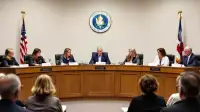

Grand Junction City Council has effectively repealed its primary legal protection for large trees following a 4-3 vote on Wednesday, Sept. 2. The decision came after a lengthy debate, with municipal planning officials and real estate developers advocating for the repeal, stating the policy complicated housing construction efforts and inadvertently incentivized the destruction of trees.
However, the repeal contradicted recommendations from city staff, members of the Grand Junction Forestry Board, and numerous constituents. Opponents argued that the change removed a crucial, albeit imperfect, protection for the city's tree canopy and clashed with priorities outlined in Grand Junction's comprehensive plan.
The now-repealed code, adopted in late 2022, defined “significant trees” based on their size, health, and structural stability. It required the preservation of at least 30% of these trees during the development of non-industrial properties. If preservation was not possible, developers were permitted to plant replacement trees or pay a fee. Despite being drafted by Grand Junction’s Housing Affordability Code Task Force, city staff stated there was no evidence the repeal would make housing construction or markets more affordable, a point advocates did not dispute as making a noticeable dent in the area's fast-growing housing costs.
Developers contended the protective measure was detrimental to trees. Staff reports indicated the policy had saved only one tree in the past three years. Kevin Bray, Director of Bray Real Estate Development and Co-Chair of the Housing Affordability Task Force, highlighted a loophole in the code: property owners could avoid preservation requirements by destroying all significant trees on a lot before filing their development application. Bray called this language a “perverse incentive” that encouraged proactive tree removal rather than planning around existing vegetation.
While developers at the meeting claimed such protections were unnecessary and infringed on private property rights, advocates maintained that the code section, despite its vulnerabilities, represented a key protective measure for Grand Junction’s tree canopy. Jane Quimby, an area resident who works for a development company, noted that many local trees were planted long before the policy's adoption and that developers often try to preserve trees voluntarily due to community preference.
The vote saw Cody Kennedy, Ben Van Dyke, Robert Ballard, and Mayor Laurel Lutz vote in favor of the repeal. Council members Anna Stout, Jason Nguyen, and Scott Beilfuss voted against it. Ahead of the meeting, the Grand Junction Forestry Board formally recommended delaying the vote to allow for more deliberation in work sessions, arguing that significant policy changes impacting valued community resources deserved a thoughtful and inclusive process.
Public commenters also expressed concerns that the change could jeopardize the local tree canopy, with several suggesting targeted code modifications as a better approach than outright repeal. One commenter at the meeting stated, “I don’t think we’ve heard a great argument that repealing this code will save that many trees.”
Council member Anna Stout, who serves as the City Council’s liaison to the municipal forestry board, argued that the policy required more input from non-developer stakeholders before proceeding. She suggested moving the item to a workshop meeting. The three dissenting council members sought a more robust discussion of alternative preservation measures to replace the repealed code. Stout remarked that discussing only “repeal, or don’t repeal,” was not the way to make good policy.
City staff had formally recommended denying the repeal proposal. Grand Junction Principal Planner Tim Lehrbach presented findings that removing the protection would clash with directives in the city’s comprehensive plan to preserve natural resources, specifically the tree canopy. City Manager Mike Bennett clarified this recommendation reflected staff's assessment of consistency with the comprehensive plan, not personal opinions. Council member Jason Nguyen emphasized that such an inconsistency with the comprehensive plan, which is developed through extensive public engagement, should carry significant weight.
Most council members who voted for the repeal indicated a desire to replace it with other protective measures for trees, favoring voluntary incentives over punitive approaches. Mayor Laurel Lutz expressed a preference for an incentive-based approach, particularly for regulations that were perceived to be causing tree loss rather than preservation.
Separately, in the city's historic core—the area between Colorado Avenue, North Avenue, First Street, and 19th Street—residents are tasked by the city with watering street trees. A recent survey by the Grand Junction Forestry Department identified 373 established trees across 181 properties at risk of under-watering, prompting the city to ask residents to continue watering trees, even amidst ongoing drought conditions.