Grand Junction City Council has given the green light to the Salt Flats affordable housing development, moving forward with the construction of 48 new homes off 28 Road near Grand Avenue. The council's unanimous 6-0 vote on Wednesday, Sept. 16, allows Grand Junction Homes LLC, an affiliate of the nonprofit Rural Homes Colorado, to begin building these long-awaited houses over the next year. This development is the initial phase of a larger vision for the Salt Flats subdivision, which officials hope will eventually include around 450 homes.
The approval came after an hour of debate and public comments regarding the potential selling prices of the units. Council members had initially expressed some misgivings, as the homes' prices are tied to buyers' income levels rather than fixed dollar amounts. Mayor Laurel Lutz weighed in on the discussion, suggesting that further debate on pricing was "a little bit of a moot point," because market forces would ultimately determine saleability and that those matters "will work themselves out."
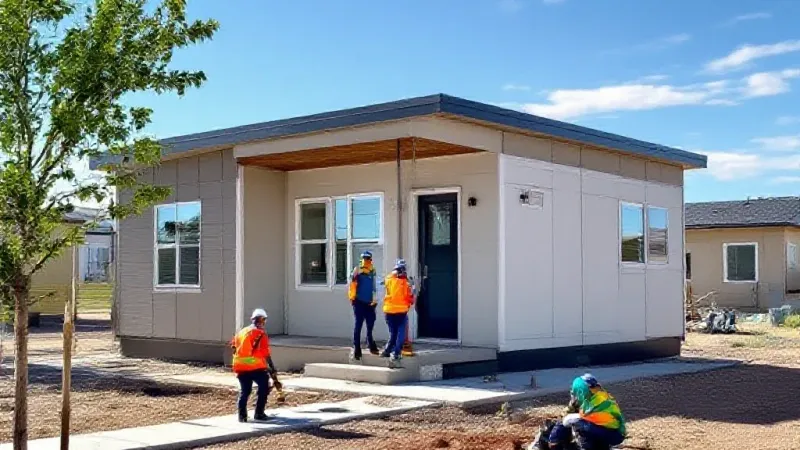
The 48 homes planned for the development will be "modular" houses, meaning they will be manufactured offsite and then assembled in Grand Junction. According to Rural Homes Colorado CEO and President David Ware, who spoke at the Wednesday council meeting, the sale price of these homes will be determined by specific economic conditions outlined in a development agreement and related deed restrictions.
These deed restrictions are central to the project's affordability goals. For instance, prospective buyers must have an annual income that does not exceed 100% of the Area Median Income. Based on 2025 data, this translates to $71,400 for a one-person household or $81,600 for a two-person household. Furthermore, the maximum sale price of a home is capped by a deed restriction designed to ensure that the buyer's combined monthly housing payments—including mortgages, interest, property taxes, home insurance, and association fees—do not surpass 35% of their annual income on the date of closing.
The restrictions also extend to future resales of the homes. For the next 40 years, the properties cannot be resold unless the new buyer's housing payments meet the same 35% income stipulation, or if the resale price represents an annual growth of less than 3% since its last sale, whichever of those two criteria results in a lower price.
Despite these limitations, interest in the properties appears high among local residents. David Ware informed the council that more than 300 people are currently on the interest list for the 48 houses. Ware stated his team was willing to "make price adjustments" if needed, to avoid unsold inventory.
During the public hearing, Grand Junction resident Keith Pierce shared his personal story, expressing that he and his fiancée "fell in love with the Grand Valley" and wished to stay. He conveyed his belief that the program offered a chance for them to "make a go of it here in this town" and give back to the community.
The City of Grand Junction played a significant role in bringing the Salt Flats project to fruition, providing financial support and land. The city sold a parcel of property to Rural Homes Colorado for $0. This land was part of a larger 21.78-acre site that the city acquired and prepared at a total cost of approximately $5.75 million. City staff reported that about $2.55 million of this sum came directly from Grand Junction's municipal budget, covering grant matches, incentive payments, and infrastructure spending. The remaining funds were sourced from various outside grants.
These grants, however, came with specific conditions, including a state-imposed requirement for Grand Junction to implement deed restrictions on the properties. These requirements contributed to a series of delays that preceded Wednesday's vote. The project, which is the first development within the Salt Flats subdivision, had an initial groundbreaking ceremony planned for August 15, but it was postponed just over a week beforehand. Action items related to the subdivision were repeatedly scheduled for City Council consideration in recent months but were consistently continued to later dates with minimal public discussion. Interim City Attorney Jeremiah Boies noted that the deed restrictions "were the subject of much negotiation" and expressed satisfaction that a common ground had been reached among all parties.
The development marks a significant step towards increasing affordable housing options in Grand Junction, with local officials and developers working through complex financial and regulatory requirements to address a pressing community need.