
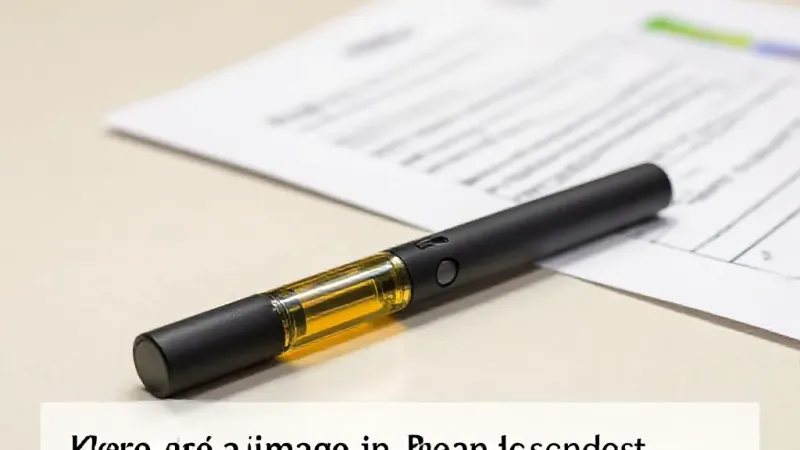
Colorado regulators have issued a public health and safety warning concerning marijuana vapes found to contain methylene chloride, a toxic solvent. The Colorado Marijuana Enforcement Division (MED) stated late Friday that these contaminated vapes should not be consumed and were sold at 405 dispensaries across the state, affecting consumers in communities like Grand Junction and Fruita.
Methylene chloride, identified as the contaminant, is a chemical that the Environmental Protection Agency (EPA) has sought to ban for most uses due to its potential to cause cancer. The MED’s advisory follows reports of delays in implementing expanded state testing protocols that would have detected the hazardous substance.
The vapes in question were manufactured by Pueblo County-based StayCon, which operates as Craft. StayCon had previously issued its own voluntary recall of the products, notifying dispensaries on September 18. According to StayCon’s recall notice, a “botanically-derived” flavoring compound used in its marijuana vapes contained methylene chloride. Some of these affected products had been available on dispensary shelves for more than a year and a half, between March 27 and September 25.
State law in Colorado prohibits the use of methylene chloride by marijuana manufacturers. The chemical can be used to cheaply synthesize hemp into THC, the psychoactive compound in marijuana. Products made through this chemical conversion are then often falsely labeled and sold as marijuana-based, a process also banned by state law. The EPA's move to ban methylene chloride for most uses in 2024 was recently struck down by the U.S. Court of Appeals for the 5th Circuit, which sent the matter back to the agency for further review.
The MED had planned to implement expanded testing protocols for methylene chloride and other solvents in July of this year. However, these protocols were delayed, with the State Health Department taking until September to send its recommendations for lab certification to the MED. These expanded testing procedures are now expected to begin by the end of this month.
Notably, the owner of a third-party lab that detected the toxic solvent in StayCon products, which can also be used to strip paint, reported notifying both the company and the state six weeks before StayCon issued its recall. This indicates a significant lag between initial detection and public warning or manufacturer action.
When asked for comment, Kyle Boyd, a spokesperson for the Colorado Marijuana Enforcement Division, previously stated that the agency “does not comment on investigations.” StayCon did not respond to questions regarding the situation. The MED advisory indicated it would provide updates if additional affected products are identified, underscoring the ongoing nature of the public health concern for residents across Mesa County and beyond.