
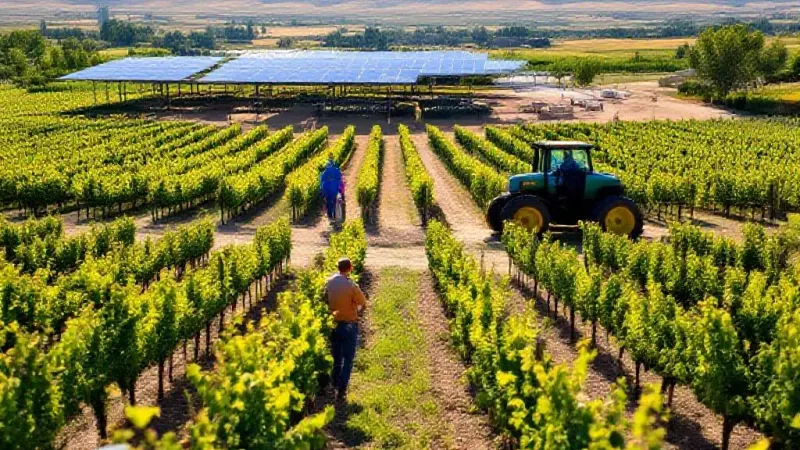
Grand Junction, a vital region for growing grapes, faces significant climatic challenges including frosts, scorching heat, and droughts, sometimes all in the same growing season. To address these issues, Colorado State University (CSU) researchers at the Western Colorado Research Center in Grand Junction have established the first vitivoltaic research array in the United States.
This unique project, founded in January 2026, involves arrays of solar panels towering above grapevines. Some panels are fixed in place, while others use dynamic tracking to change their angle throughout the day. The goal is not just to measure power production, but to understand how these systems can provide resilience for grapevines against the region's unpredictable weather patterns, which scientists call "weather whiplash."
State Viticulturist Horst Caspari and postdoc Analissa Sarno are leading the project. They have designed instrumented rows to gather detailed information about the conditions under the panels. Sensors in the ground measure soil moisture and temperature, while other sensors track airflow speed both above the panels and in unsheltered control areas. Cameras also collect data from shaded and uncovered plots. This comprehensive data collection started in January 2026.
The project is examining the difference in how fixed and moving panels affect the grapes below, particularly concerning the shadows they cast. Fixed panels create a constant shadow, while dynamic panels produce a shifting one. The CSU team is tracking the amount of energy produced per month and since the project began, comparing output from fixed-tilt rows and dynamic tracking rows against a rooftop baseline solar installation to understand how the agricultural environment impacts performance.
So far, the team has reported data from two sunny days: May 11, using standard tracking, and July 11, using dynamic tracking. A key metric for the research is the gap between the energy potential and actual production, considering that dynamic tracking might incur energy losses due to mechanical movement and misalignment. The core question is whether any such losses are justified by the microclimate benefits created for the vines below.
The project's deeper aim extends beyond electricity generation. It seeks to provide a resilient solution for grape growers. Traditionally, growers have relied on expensive and difficult-to-operate smudge pots and wind machines to protect against frost damage. This research is inspired by a trial in Tresserre, France, where solar glass panels provided frost protection, and aims to replicate similar results in Grand Junction's challenging environment.
Success for this project would validate the vitivoltaics concept under conditions that encompass frost danger, heat waves, and drought in the same season—a scenario common in the Grand Valley. The potential applications could reach beyond Colorado to other drought-stressed wine regions, frost-prone orchards, and specialty crop farms worldwide experiencing increased climate volatility. The CSU approach, with its rigorous comparison of fixed and tracking configurations and extensive sensor network, offers a valuable methodology for global adaptation.
Caspari and Sarno emphasize that they are at the beginning of these experiments. Data collected over upcoming seasons will be crucial in determining if this research in western Colorado can serve as a model for specialty crop growers globally as they face future weather swings.