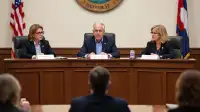
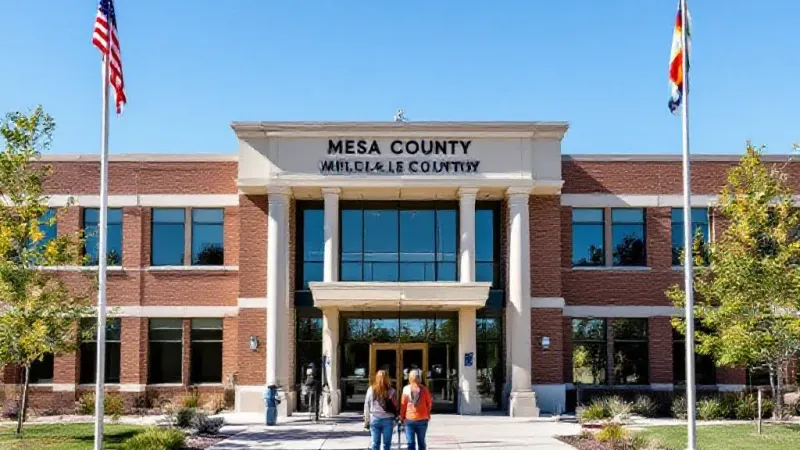
The Mesa County Board of County Commissioners unanimously approved a 12-month moratorium on data-center projects during its Sept. 29 public hearing. This action temporarily stops the acceptance, processing, and approval of land-use applications for data-center facilities in unincorporated Mesa County. The county stated in a news release that the moratorium is necessary to update its land-development code, which last saw major updates in 2020 and does not currently address data-center facilities.
Community Development Director Greg Moberg indicated the existing code lacks a definition for data centers and specific standards for their operations. While a proposed update would define data centers and restrict them to industrial zones, Moberg noted it would not fully address significant impacts such as electrical demand, water use, standby equipment, and mechanical noise.
Commissioner Bobbie Daniel highlighted that public feedback during broader Land Development Code updates made it clear that data centers required a dedicated discussion. She commented that this issue could not be "quickly fixed and put in the land development code" and needed its own separate conversation.
The moratorium took effect immediately upon adoption and will last for 12 months, although commissioners have the option to end it sooner if regulations are adopted, or extend it after another public hearing. The resolution approved by commissioners applies to facilities with a combined designed or nameplate electrical demand of at least one megawatt. Exemptions include accessory server rooms serving another principal use, certain government-operated facilities, and applications that the county determined were complete before the moratorium's adoption.
The county confirmed it has no pending applications for data-center projects. The moratorium will allow county staff to continue updating other sections of the land-development code while also gathering public feedback and input specifically on data-center regulations.
Commissioner Daniel has actively sought community input, including through a September op-ed, asking residents about desired regulations for data centers, battery storage, and other land uses. She reported that data centers became the most significant issue among resident concerns. Daniel welcomed the public turnout at the hearing, particularly from younger residents, emphasizing that self-government "takes you guys being here."
She referenced the county’s previous solar moratorium as an example of how public participation can influence regulations. During that process, staff collected contact information, held open houses, and sought stakeholder feedback on drafts. Daniel said that the resulting amendment did not satisfy everyone, but residents were involved in developing it, though she expects the data-center process to take longer than the solar process did.
Moberg suggested additional public engagement for data centers, potentially through open houses to gather input earlier in the drafting process. Daniel encouraged residents to continue submitting comments to Moberg, stating, "Tell us exactly how you want to proceed."
Daniel also clarified that the county regulates land use in unincorporated areas, while municipalities make their own decisions. Moberg mentioned that Grand Junction was considering its own moratorium and had expressed interest in aligning city and county standards.
Commissioner JJ Fletcher underscored the importance of protecting drinking and agricultural water, as well as maintaining reliable electricity, noting discussions with utilities regarding potential grid impacts. The resolution directs staff to develop standards that address electricity and water demand, cooling, noise, generators, battery storage, lighting, transportation, emergency response, and eventual site restoration. Staff are also required to coordinate with municipalities, utilities, and fire districts, and report back to the commissioners within 90 days. The resolution does not yet determine whether data centers will ultimately be permitted, conditionally permitted, or prohibited in specific zones. Daniel concluded that the process "needs to be thoughtful" and include "our community voices there at the table."