The U.S. Department of Veterans Affairs (VA) announced on Tuesday, Sept. 29, a total of $3.7 million in suicide prevention funding for eight community organizations across Colorado. Of this statewide allocation, more than $1 million will be invested directly into the Grand Valley and its surrounding counties, where the per-capita rate of suicide deaths is more than double the national average.
Mesa County Public Health estimated that veterans are particularly impacted by suicide, accounting for 18% of suicide deaths in the county over the past decade, despite making up only 10% of the adult population.
This funding is part of the nationwide Staff Sgt. Parker Gordon Fox Suicide Prevention Grant Program, which is distributing more than $112 million to 191 community suicide prevention organizations. VA Western Colorado Health Care System Director Mathew Tekansik highlighted the local impact, stating that "community organizations play a vital role in strengthening the support network available to Colorado veterans" and that "these grants provide veterans with lifesaving support and ensure they have access to the care and resources they deserve right here in our community."
The Sgt. Fox grants aim to connect veterans who are not currently utilizing VA services. According to a press release from the VA Western Colorado Health Care System, 61% of veterans who died by suicide in 2023 were not receiving VA healthcare in the year before their deaths. Conversely, Sgt. Fox grantees connected approximately 2,650 veterans who had not previously used VA healthcare with VA care and resources last year, about 1,000 more than the year prior. The VA also stated that roughly 17,000 veterans, service members, and their families received services through Sgt. Fox grantees in 2025.
Of the local investment, Mesa County Public Health received $750,000 to establish a "Tri-County Veteran Support Hub." This initiative will serve Mesa, Delta, and Montrose counties, aiming to reduce suicide risk, improve mental well-being, and strengthen social connectedness. Mesa County Public Health stated in a press release that this hub addresses a "critical deficit in mental health support for veterans and their families."
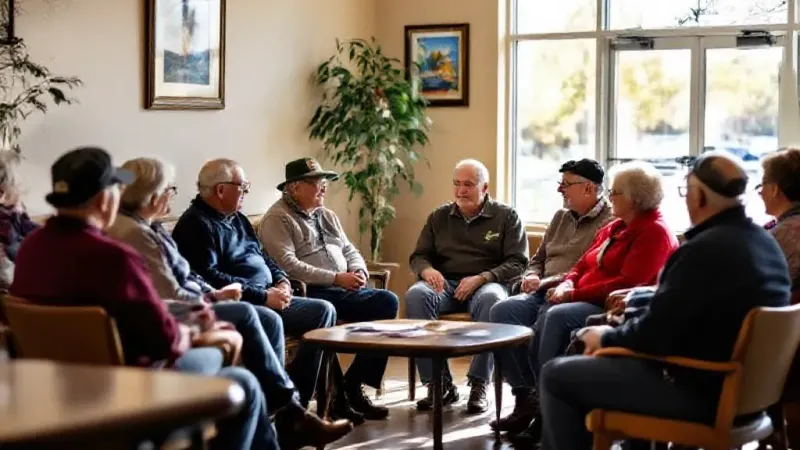
Historically, veterans in the region have faced barriers to accessing help, including stigma, rural isolation, transportation challenges, and a shortage of providers. Mesa County Public Health estimated that about one-third of the county's roughly 12,000 veterans, or 4,000 individuals, are not connected to services they should be eligible for. The tri-county hub plans to bridge this gap by connecting veterans with peer mentors who also have service experience. The agency added that these connections will be made in "natural, relaxed environments where trust comes naturally," moving away from traditional clinical settings.
Jennifer Daniels, Behavioral Health Division Director for Mesa County Public Health, explained that "many of our rural veterans are hesitant to seek help from traditional clinical institutions or view needing help as a sign of weakness." She added, "With this grant, we are stripping away that institutional stigma. By meeting veterans where they are, we can build connections before a crisis."
To extend its reach beyond Mesa County, the agency will partner with two organizations in neighboring communities. One partner is Sovereign Roots Veterans Retreat, a nonprofit in Delta County offering peer-driven, nature-based programming to reduce isolation and support wellness for veterans and their families. The second partner is the Kadkhodaian Behavioral Health Center, also established in Delta, which focuses on connecting first responders and military veterans with peer support, relationship guidance, and evidence-based programs for behavioral health and substance use disorder. Daniels emphasized that this is a "true collaborative public health effort" designed to "ensure no veteran on the Western Slope feels isolated, forgotten, or disconnected from the community they served."
Separate from the tri-county hub, the VA also awarded $340,000 to the Volunteers of America (VOA) Colorado Branch. According to the list of awardees from the VA, VOA Colorado will use this funding to serve Delta, Garfield, Gunnison, Mesa, Moffat, Montrose, Pitkin, and Rio Blanco counties. The VA document did not specify the exact purpose of this particular award.
Beyond the Western Slope, the Rocky Mountain Veterans Advocacy Project received $750,000 for statewide suicide prevention efforts. The remaining $1.9 million of the statewide funding was distributed to organizations serving regions of Colorado outside the Grand Valley, including the Eastern Plains Healthcare Consortium, The Healing Warriors Program, The Home Front Military Network, The Mt. Carmel Veterans Service Center, and The Veterans Community Project.