Grand Junction resident Daniel Fielding, a survivor of the September 11, 2001, attacks on the World Trade Center, shared his harrowing experience with personnel from the Clifton Fire Protection District on Friday, September 11. Fielding's visit to the district at 3254 F Road aimed to express his appreciation for local first responders and to keep the memory of that day alive, especially for a younger generation who may not remember it firsthand.
Fielding, now 66, was motivated to connect with local firefighters after this summer’s intense wildfire season, including the Snyder Fire, which resulted in the deaths of four firefighters. He found striking parallels between the scenes in Lower Manhattan on 9/11 and the efforts of firefighters battling blazes here in the Grand Valley. Fielding noted that the sight of helicopters and airplanes, along with people on foot working against the fires, deeply resonated with him. He even recalled an “acidic burning smell” in his own backyard while watering plants, which brought back memories of New York City after the attacks.
He recounted observing a “gaping hole with a huge fire” in New York City, and seeing firefighters, burdened with “60-70 pounds of gear, maybe more,” moving towards the danger. Fielding expressed his profound thought at the time: “‘Oh my goodness, this is an impossible situation,’ but they went,” he stated during his visit. He emphasized the critical connection between firefighters in New York City and those in the local area, highlighting that these individuals “run into danger when most folks are running in the other direction.” This selflessness inspires a “tremendous amount of awe and reverence” in him, he said.
On September 11, 2001, Fielding was teaching chemistry at the High School for Leadership and Public Service in New York City, a building less than 500 yards from the South Tower of the World Trade Center. He had just begun his second day of his second school year. From his fourth-floor classroom in the 14-story building, he and his students watched as debris flew past their windows after the first tower was struck. As a second jet roared above their building, Fielding instructed his approximately 110 students to cover their ears. He described a “huge explosion” that sent a shockwave through the building, blowing some people back from the elevator. The normal emergency evacuation point, the World Trade Center, was inaccessible, prompting an immediate evacuation.
As they emerged onto the street, the full scope of the attack became horrifyingly clear. Fielding and his students decided to evacuate towards Battery Park. After walking just two blocks, Fielding turned back and witnessed the top of the South Tower begin to slip, followed by a sudden collapse. He recalled telling his students to run as fast as they could when they saw the approaching dust cloud, believing they could outrun it. However, the compression of air from 110 stories created a cloud moving at an estimated “50 to 60 miles an hour,” making escape impossible. He said they “just got caught in it,” losing visibility to the point where they “couldn’t even see your hand in front of your face for a number of minutes.”
Fielding also shared the emotional impact of witnessing New York City firefighters, who knew their colleagues were inside the North Tower after it fell, “start hugging each other and crying.”
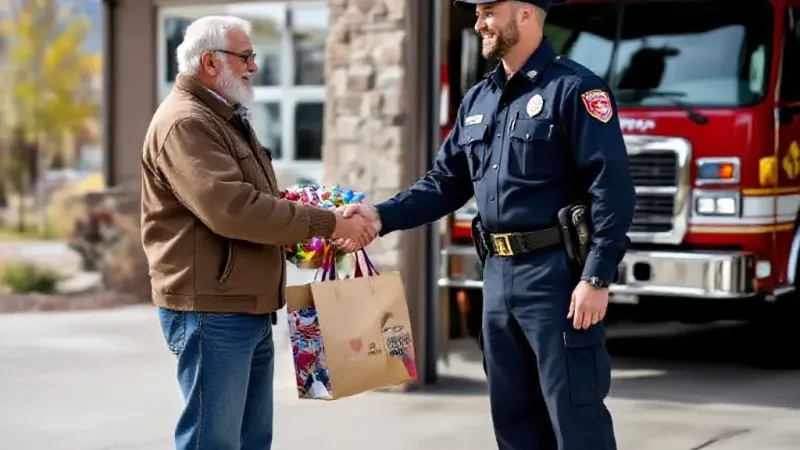
During his Friday visit to the Clifton Fire Protection District, Fielding brought copies of his former school’s yearbook and the inaugural edition of its student newspaper, which was published after the school returned to its original building in February 2002. He also provided pizzas for the crew and presented the district with an American Flag adorned with the names of each victim of the attacks.