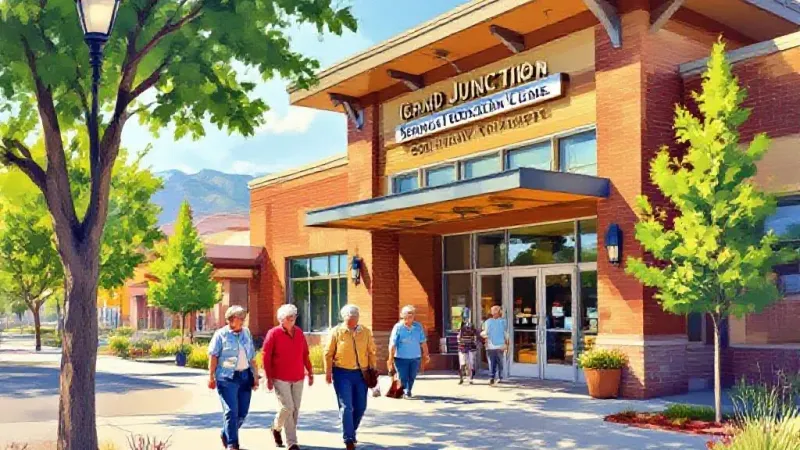
Grand Junction’s Senior Recreation Center, located at 550 Ouray Avenue, will remain open following a decision by City Manager Mike Bennett to reverse a proposed closure. Bennett announced the reversal at the Oct. 21 Grand Junction City Council meeting, stating the city had acted too abruptly and underestimated the value residents would lose by moving activities to the new Community Recreation Center.
The decision ensures the Senior Center continues to provide a dedicated space for older adults, addressing community concerns raised over the past week. Bennett acknowledged that the Community Recreation Center’s programs and amenities could not fully replace what the Senior Center offers. "The communication was too abrupt and too quick," Bennett said, adding, "and I own the fact that it caused a lot of consternation and concern."
Following the reversal, the city plans to revise its recommended 2027 budget to continue funding the nonprofit that operates the Senior Center. A new agreement with the nonprofit’s board is slated for development by January 2027.
The city manager’s decision came after an Oct. 15 public meeting at the Senior Center and extensive feedback from users. Residents voiced concerns that the closure proposal threatened established friendships, familiar routines, and a vital gathering place tailored specifically for older adults. The proposal also prompted questions among residents who felt they had not anticipated losing existing facilities when they supported the new Community Recreation Center.
Bennett took responsibility for the initial recommendation to close the center, explaining that city departments had faced difficult budget reductions as the current leadership team worked to address a structural deficit that began in 2021. While the original proposal was presented as an efficiency measure, Bennett conceded that this approach "overlooked some of the impact."
Council member Cody Kennedy clarified that the reversal was an administrative decision by the city manager, rather than a City Council vote. Kennedy noted that the city charter prevents council members from interfering with operational items like facility closures, though they can influence funding through budget allocations. He credited Bennett and his staff for reconsidering the proposal, stating, "When we’re getting credit tonight for making this change, that’s not where the credit lies. It’s not with us. It’s with the city manager and his team." The City Council is scheduled to consider adopting the 2027 budget in November.
During previous discussions, residents highlighted the unique role of the Senior Center as a hub for companionship and informal activities. Users gather there to play cards, do puzzles, attend bingo, participate in karaoke, or simply visit with friends. For many, especially those who have lost longtime companions, the center offers a crucial opportunity to socialize and be recognized by name. Speakers emphasized the needs of residents in their 80s and 90s, some of whom face limited mobility, transportation challenges, or fixed incomes. They questioned whether these individuals would feel comfortable navigating a larger, multi-generational facility like the Community Recreation Center. Residents sought to preserve a dedicated space where they could arrive at their own pace and enjoy the company of peers. Bennett later acknowledged this distinction.
The proposed closure would have reduced General Fund expenses by approximately $100,000 annually, contributing to the Parks and Recreation Department's $900,000 reduction target. The Community Recreation Center, however, operates with separate, dedicated funding and is not responsible for the General Fund deficit, a point reiterated by Bennett and Parks and Recreation Director Ken Sherbenou. Sherbenou had previously stated that the closure proposal stemmed from General Fund budget challenges. The Community Recreation Center's revenue projections could also be affected if voters approve funding to repair and retain Orchard Mesa Pool, as some pool users were expected to transfer to the new facility.
At both the Oct. 15 meeting and the recent council meeting, residents offered to help keep the Senior Center open. They requested detailed breakdowns of building expenses to explore fundraising efforts, cost reductions, or user contributions. Some asked for more time to seek grants or identify donors. During the Oct. 21 council meeting, several speakers suggested seeking benefactors, approaching local philanthropists, or utilizing the nonprofit’s status to raise money. They noted that developing such financial support would take time, more than the few months remaining before the initially proposed closure. Representatives of the center also reported renewed community interest in assisting the organization and a willingness to work with the city on its future.
Bennett thanked residents who provided specific examples and constructive feedback, which he said helped officials understand the center’s distinct role. However, he stated that "angry personal attacks against public employees did not move the needle" or influence the decision. Not all residents felt their feedback was adequately heard initially; Rick Parkinson, a speaker, said he left the Oct. 15 meeting feeling that his questions were met with "repeated talking points" and that officials "really didn’t see or hear me."