
Colorado has significantly invested in quantum technology, establishing a leading cluster statewide. While often perceived as a Front Range initiative, local leaders suggest a direct opportunity for the Western Slope, particularly through advancements in precision agriculture. This push for advanced technology, according to Dalida Sassoon Bollig, CEO of the Business Incubator Center, 2591 Legacy Way, Grand Junction, offers a choice for rural communities to connect with a generational economic shift.
The state’s commitment to quantum technology now boasts roughly 3,000 workers across more than thirty companies. This sector is anchored by a federal Tech Hub designation and research efforts at CU Boulder, Colorado State University, and the Colorado School of Mines. Further solidifying this direction, Colorado signed an agreement with Taiwan earlier this year to deepen work across quantum, photonics, semiconductors, and notably, precision agriculture. These strategic decisions are crucial because investment and skilled talent tend to gravitate towards regions that are prepared for them.
While it's understandable to view this as a Front Range story, industry leaders involved in building this sector suggest the opportunity extends more broadly. The quantum field, according to Elevate Quantum, the consortium spearheading the statewide effort, isn't solely for physicists. The group reports that the average quantum job pays over $125,000 annually and projects that nearly half of these roles will not require an advanced degree. Furthermore, technician positions are expected to double as a share of the workforce within the next five years. To address this evolving need for a broader range of technical skills, the Colorado School of Mines has launched the nation’s first bachelor’s degree in quantum-systems engineering. Elevate Quantum indicates that the industry's primary bottleneck is a shortage of qualified personnel, with approximately three open quantum jobs for every available worker. This deficit represents either a challenge for the Front Range or a significant opportunity for the Western Slope.
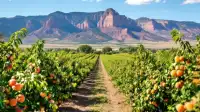
The specific inclusion of precision agriculture in the state's agreement with Taiwan highlights a key connection for the Western Slope. Precision agriculture involves deploying sensors in fields, collecting data from center pivots, implementing smarter irrigation techniques, and gathering improved soil information. These technologies aim to help agricultural producers maximize output from limited water resources and other inputs. This area directly aligns the state’s advanced-technology strategy with an industry already deeply understood and practiced on the Western Slope. The region possesses the necessary producers, expansive land, pressing water challenges, and practical knowledge that technology companies require for their products to succeed beyond laboratory settings. The entry point for the Western Slope may not be in quantum computing itself, but rather in supporting fields such as machining, electronics, optics, sensor technology, advanced manufacturing, or the agricultural applications built upon these technologies. These are capabilities a rural region can realistically develop.
However, creating this "on-ramp" requires local initiative. A federal designation or an international agreement does not automatically train a technician in Delta or connect a Montrose grower to a photonics firm. These actions only establish the *possibility* of participation. Converting this potential into tangible economic benefits and paychecks depends on local work. This local effort could include community colleges developing relevant credentials, employers willing to invest in initial cohorts of trained workers, manufacturers building capacity to supply new industries, and advisors linking rural businesses to existing programs. If this localized effort does not occur, the opportunity may be missed, appearing years from now as simply one more advantage that accumulated in areas already prepared, bypassing others. Dalida Sassoon Bollig emphasized that while agriculture, energy, outdoor recreation, and small businesses remain the backbone of the local economy, when the state makes a significant, generational investment, rural communities must choose: either build the workforce, partnerships, and infrastructure to connect to it, or assume the opportunity is for another region. The fundamental question for the Western Slope, Bollig notes, is whether the region intends to forge the connections that allow its businesses, workers, and communities a place in Colorado’s emerging quantum economy. As Bollig states, "No one else is going to build that on-ramp for us."