
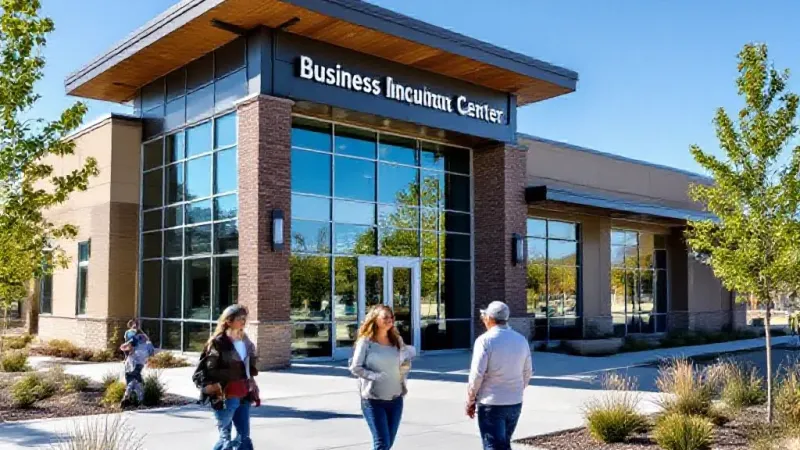
The Business Incubator Center (BIC) is marking its 40th anniversary this month, celebrating decades of work building a more stable economy in Mesa County. Born out of the region's history of boom-and-bust cycles, the BIC helps local entrepreneurs create businesses, support families, and establish lasting jobs. To commemorate this milestone, the center will host Entrepreneur Exchange 2026 (EN/EX 26) on October 16 from 11 a.m. to 1 p.m. at the Grand Junction Convention Center. According to Business Incubator Center CEO Dalida Sassoon Bollig, approximately 35 percent of all businesses currently operating in Mesa County have received assistance from the incubator since its inception.
The center's origins are deeply tied to Mesa County's economic history, which saw significant swings due to industries like uranium, coal, and oil shale. The 1982 oil shale collapse, often referred to as Black Sunday, served as a turning point, prompting the community to seek a more resilient economic future. Barbara Creasman, who worked in policy and research for Mesa County and helped write an early grant for the effort, recalled that these cycles had shaped the region for a long time. While some residents accepted the economic fluctuations as a part of life, a broader question emerged: how could people earn a steady living, establish roots, and thrive amidst the region's economic uncertainties?
Initially conceived as a loan fund, the incubator quickly expanded its scope to provide comprehensive assistance to residents already living in Mesa County. Forty years later, the center continues its mission by offering business guidance, financing, workspace, and other resources designed to help companies start, stabilize, and grow. This approach was crucial because, as Creasman emphasized, the focus was on supporting the needs of the existing community, rather than solely recruiting businesses from outside the area. Kathy Hall, the center’s board president and a former Mesa County commissioner, noted that the center's beginnings reflect a community "willing to work through its own problems."
The efforts that led to the BIC began informally around 1985 with a “kitchen table group.” This volunteer group, consisting of business owners and local government representatives, visited companies, reviewed financial information, and helped owners address challenges. These efforts formalized into the Western Colorado Business Development Corporation in 1986, which is now known as the Business Incubator Center. Establishing these services involved overcoming questions about the government's role, the inherent risks of lending to small businesses, and which specific industries should receive support. Creasman recalled some resistance to early efforts, including concerns about accepting grant funding and the obligations that came with it.
The center adopted a broad approach, aiming to serve the diverse range of businesses already operating in Mesa County, rather than specializing in one industry like technology or food production. This meant connecting entrepreneurs with knowledge and resources tailored to their specific situations, acknowledging that “Nobody’s an expert in everything,” as Creasman observed. The revolving loan fund, established just before the incubator, provided critical financing, with repaid money recirculating to help other businesses. This financial support was coupled with business assistance, as evaluating loans revealed that money alone couldn't resolve all needs; owners also required skills and information to succeed.
Mesa County's involvement allowed the center's work to extend beyond Grand Junction, reaching communities like Fruita, Palisade, and unincorporated areas. Local businessman George Wheeler played a key role in the incubator's establishment, providing its first physical space in his downtown warehouse at a reduced lease rate. Kathy Hall, during her time working for U.S. Sen. William Armstrong and later as a commissioner, helped secure startup funding and supported the center’s relocation to former Department of Energy property. Over the years, the BIC has assisted many local businesses, including Laura Bradford’s ProSafe Linen, which was one of its first tenants. Other notable companies include Loki, a Grand Junction outdoor apparel company known for its innovative clothing, and Palisade-based Pear Blossom Farms, which utilized the incubator’s food-production facilities starting in 1994 before establishing its own facility.