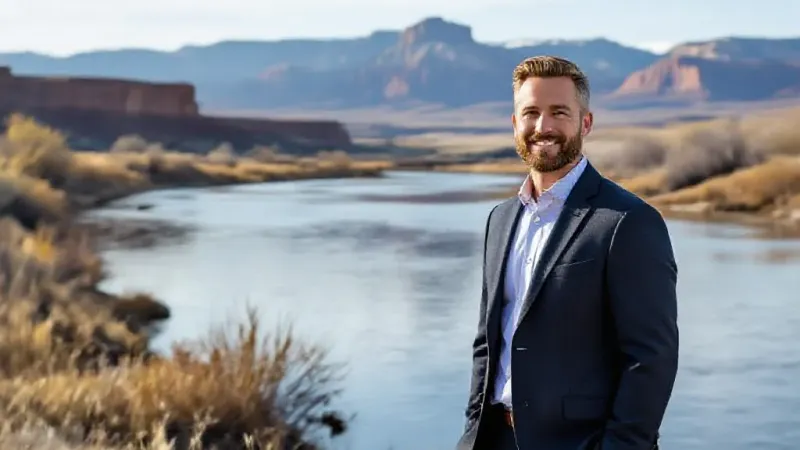
State Sen. Dylan Roberts, whose district includes parts of Colorado’s Western Slope, was elected co-chair of the Colorado River Forum’s Upper Basin last week during a meeting in San Diego. This appointment places Roberts in a key leadership role as the seven states along the Colorado River Basin face significant decisions regarding the river’s future, particularly with the impending expiration of crucial operating guidelines for Lakes Powell and Mead.
The Colorado River Forum, a program under the Council of State Governments West, convenes lawmakers from the seven states that share the Colorado River Basin. The forum is guided by co-chairs from both the Upper and Lower basins, who each serve two-year terms. Roberts will serve alongside Arizona State Sen. Tim Dunn, who was chosen as the Lower Basin co-chair during the San Diego event.
The three-day forum brought together legislators, researchers, water officials, and other stakeholders to address the Sept. 30 expiration of the Interim Operating Guidelines. These guidelines have directed reservoir operations at Lake Powell and Lake Mead, which together store approximately 80% of the Colorado River’s reserved water, since 2007. The upcoming deadline marks a critical juncture for water managers and communities across the basin, including those in Mesa County and the surrounding Grand Valley.
Roberts underscored the gravity of the situation, calling it "an unprecedented time of uncertainty for the Colorado River Basin." He further stated that the next two years will be critical for the river's future and for every state that depends on its resources. As co-chair, Roberts expressed his commitment to facilitating meaningful dialogue and maintaining interstate collaboration to ensure the river can continue to provide for generations to come.
Since his election to the state legislature in 2022, Roberts has been involved in water-related legislation. His past work includes passing the annual measure that allocates funds to the state’s Water Conservation Board, an agency within the Department of Natural Resources. This legislative background positions him to contribute significantly to the forum’s ongoing discussions on managing Colorado’s vital water resources.
Beyond the specific guidelines for the major reservoirs, forum participants in San Diego also explored other aspects of water management. Discussions included tours of high-intensity urban water production facilities, investigations into physics-informed artificial intelligence modeling for water systems, and reviews of public and private financing structures relevant to water infrastructure and conservation.
Edgar Ruiz, director of the Council of State Governments West, expressed anticipation for Roberts’ leadership, noting it comes at a very critical and uncertain time for the basin. Ruiz clarified that while federal rules establish the broader framework for river operations, the practical work of conservation, infrastructure development, and adjusting legal frameworks to address long-term aridification falls to states and local water managers. He said that this reality offers policymakers across the basin an important opportunity to help shape solutions and work directly with key stakeholders.
Looking ahead, Senator Roberts is slated to host the 2027 Colorado River Forum, though the specific location for that future meeting has not yet been determined. His election to this leadership position underscores Colorado's ongoing role in the complex efforts to secure the future of the Colorado River, a vital resource for communities and economies across the Western Slope.