
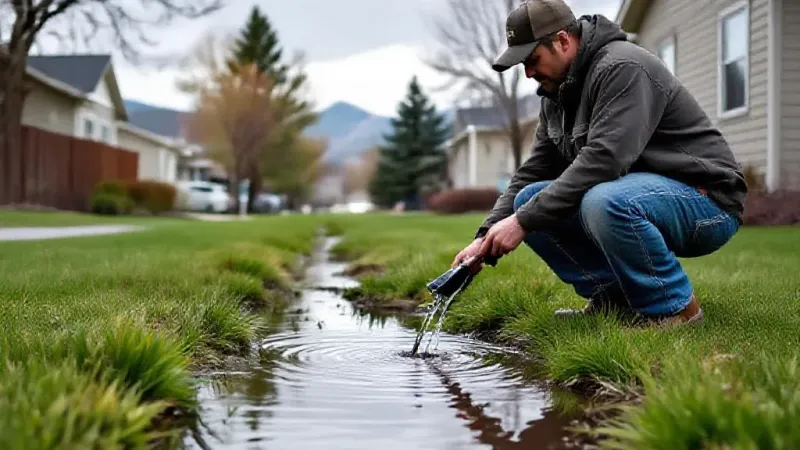
Heavy rainfall over recent weeks is prompting concerns for homeowners across the Western Slope regarding the health of their septic systems. Montrose County, in particular, has experienced a nearly 150% surplus of rainfall in the past several weeks, according to officials. This excessive water can significantly impact how septic systems operate, potentially leading to costly damage and unsanitary conditions within homes.
Jack Northrup, a Montrose County building official and sanitarian, explained that one of the primary issues is water infiltrating septic drain fields. “That can inundate the area that otherwise has to accept wastewater. It can be filled up with abnormal levels of surface water,” Northrup stated. Beyond the drain field, the electrical components of septic systems are also vulnerable. These crucial parts can become flooded, leading to an accumulation of silt and debris, which can then short-circuit electrical components, Northrup added.
Officials noted that the impact of heavy rain can be considerably greater after a prolonged drought. Northrup elaborated on this phenomenon, explaining that long periods of dry weather cause the ground to shrink, creating cracks and fissures. Subsequent heavy rainfall, often associated with monsoonal patterns, can then open new channels in the ground. These new pathways can expose areas that might not have seen new groundwater or surface water in decades, significantly increasing the risk to septic systems that rely on stable soil conditions for proper drainage.
Homeowners might not notice damage to their septic systems immediately. Northrup cautioned that the full effects and damages might not become apparent until later. For instance, symptoms could expose themselves over time if a pipe was cracked, or if some settling occurred within the system’s underground infrastructure, leading to delayed complications.
To help mitigate these risks, officials recommend that homeowners vigilantly watch for water pooling around their septic system components after heavy rains. If residents are uncertain about the condition of their system or suspect potential issues, they should arrange for an inspection by a qualified professional. Professionals also encourage residents to proactively learn the exact location of both their well and septic system on their property and to check their condition before severe weather events occur.
Experts further advise having well water tested after heavy rainfall as a precautionary measure, especially if there are concerns about groundwater infiltration. Northrup underscored the critical nature of septic system maintenance, describing it as a “critical unseen part of homeownership” that is, unfortunately, often neglected. He warned of serious consequences, noting that, at worst, neglected systems can lead to sewage backing up into the home and coming through drains, creating an immediate health hazard and significant repair expenses for residents.