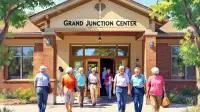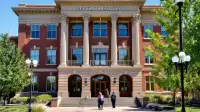
The Grand Junction Senior Recreation Center at 550 Ouray Ave. will stay open after City Manager Mike Bennett reversed a proposal to shut down the facility, as The Business Times reported.
Bennett announced his decision at the start of the Oct. 21 Grand Junction City Council meeting, stepping in before local residents took the podium to speak on the matter. The reversal halts a plan to transition activities over to the new Community Recreation Center, with Bennett acknowledging that administrative staff had acted too abruptly and failed to realize what older residents stood to lose in the move.
Under the updated direction, the city plans to revise its recommended 2027 budget to maintain operational space for the nonprofit organization running the center. City officials expect to work out a new agreement with the nonprofit's governing board by January 2027. The City Council is scheduled to formally consider adopting the overall 2027 budget in November.
The policy U-turn came after an Oct. 15 gathering at the Senior Center sparked intense community pushback. For a week, residents and regular users voiced concerns that shuttering the Ouray Avenue location would disrupt longtime friendships, daily routines, and a unique gathering space built specifically for older adults.
Addressing the audience at the Oct. 21 meeting, Bennett took personal responsibility for the original closure recommendation. He explained that city departments were dealing with difficult spending cuts as staff attempted to fix an inherited structural deficit tracing back to 2021. Bennett noted that the closure was initially framed as an efficiency measure meant to trim General Fund expenses by roughly $100,000 annually, contributing to a $900,000 reduction target for the Parks and Recreation Department.
However, Bennett conceded that the push for efficiency overlooked the human toll. He noted that the communication was too quick, acknowledging it generated significant concern among residents. Bennett told The Business Times that while the new Community Recreation Center offers modern amenities, those features cannot replicate the distinct environment of a dedicated senior center.
During the meeting, Council member Cody Kennedy clarified the legal limits of the council's authority under the city charter. Kennedy pointed out that the charter explicitly bars council members from interfering in operational matters, such as deciding whether a specific municipal facility remains open or closed. Kennedy stated that while council members guide funding through budget allocations, credit for reconsidering the closure belonged entirely to Bennett and administrative staff.
Prior to the decision, Parks and Recreation Director Ken Sherbenou had pointed to community survey results and focus groups that cited the Community Recreation Center as the city's top recreation priority. But senior center patrons pushed back, arguing that public backing for a broad new recreation complex was never meant as approval to eliminate their established space.
Visitors to the Ouray Avenue site noted that the center offers informal activities—such as card games, puzzles, bingo, karaoke, or simple visits—that appeal to seniors who have little interest in an athletic venue. Speakers highlighted the needs of patrons in their 80s and 90s, particularly those managing fixed incomes, physical limitations, or transit challenges, who felt uncomfortable navigating a busier facility packed with families and exercise equipment.
The administrative reversal also touches on broader city budget dynamics. Beyond the $100,000 in General Fund savings, the proposed closure might have freed the building for municipal departments currently operating in costly leased space. It also could have shifted some users toward paying membership dues at the Community Recreation Center. Meanwhile, the new facility's revenue projections could face additional pressure if local voters choose to fund repairs for the Orchard Mesa Pool, which would keep pool users from transferring over.
At both recent public meetings, users offered to help find alternative financing for the Senior Center, proposing grant applications, fundraising drives, and outreach to local philanthropists. Representatives emphasized that building private financial support requires time that a swift closure would have cut short.
Bennett expressed gratitude to residents who offered constructive feedback and specific examples, though he clarified that personal attacks directed at public employees played no part in shaping his administrative decision.